
Pad Printing for Promotional Products: The Complete Australian Buyer's Guide
Discover the best pad printing methods for promotional products in Australia — ideal for resellers, businesses & marketing agencies sourcing custom merch.

Written by
Stella Kwan
Branding & Customisation
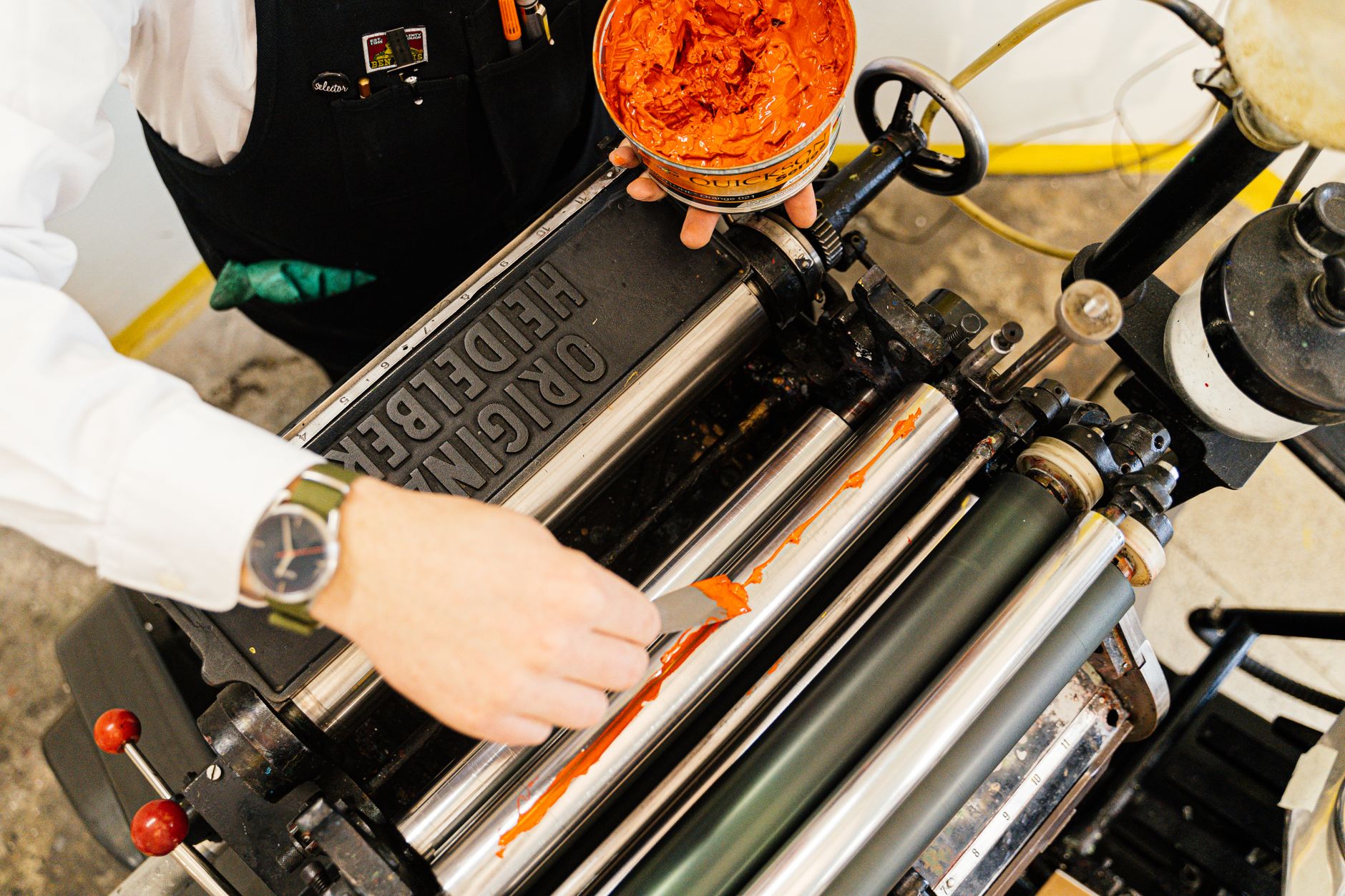
Pad printing might not be the flashiest decoration technique in the promotional products world, but for many items it is simply unbeatable. If you have ever held a branded pen, a custom USB drive, or a golf ball stamped with a company logo, chances are you were looking at pad printing in action. For resellers, marketing agencies, and business buyers sourcing promotional merchandise across Australia, understanding how this process works — and when to specify it — can make the difference between a sharp, professional result and a frustrating, costly mistake. This guide covers everything you need to know about choosing the best method for pad printing for promotional products, from ink selection and cliché preparation to substrate compatibility and turnaround expectations.
What Is Pad Printing and How Does It Actually Work?
Pad printing is an indirect gravure printing process. A design is etched into a flat plate — called a cliché — which is then flooded with solvent-based ink. A doctor blade wipes away the excess, leaving ink only in the recessed image. A silicone pad picks up that inked image and transfers it onto the product surface.
The magic of the silicone pad is the reason pad printing excels where other decoration methods struggle. The pad is flexible, so it can compress and conform to curved, textured, recessed, or irregular surfaces. A flat digital print or a screen print simply cannot do what a pad can. That adaptability makes it the go-to method for small, hard goods — the kinds of promotional items that are almost impossible to decorate any other way.
Understanding the Core Components
Getting the best result from pad printing starts with understanding what goes into the process:
- The cliché (printing plate): Steel clichés are more durable and produce sharper detail than polymer plates. For higher-volume runs or repeat orders, steel is worth the additional setup investment.
- The silicone pad: Pad hardness affects ink transfer. Softer pads suit rougher or more textured surfaces; firmer pads deliver sharper results on smooth, flat areas.
- The ink system: Solvent-based inks are the industry standard for adhesion across a wide range of substrates. UV-curable and water-based options exist for specific applications.
- The substrate: Not all plastics, metals, rubbers, or ceramics behave the same way. Surface energy, texture, and coating all affect how well ink bonds.
The Best Method for Pad Printing for Promotional Products: Matching Process to Product
When your clients ask you to source branded merchandise — whether that is a Sydney tech firm ordering custom USB drives or a Melbourne sports club commissioning branded golf balls — the quality of the pad printing outcome depends heavily on how well the process is matched to the product.
Single-Colour vs Multi-Colour Pad Printing
Single-colour pad printing is the most cost-effective and technically straightforward option. If your client’s logo works in one colour — a common scenario with simple wordmarks — this is often the fastest and most affordable path.
Multi-colour pad printing requires either multiple pads (one per colour) or multiple passes through the machine. Registration — that is, the precise alignment of each colour layer — is critical. For intricate logos with two, three, or four colours, experienced suppliers will use indexed machines with tight registration tolerances to keep the result crisp.
For clients with complex, full-colour artwork, pad printing is not the right choice. In those cases, digital printing or UV printing on hard goods will deliver a better result. Knowing this boundary is just as valuable as knowing when pad printing shines.
Substrate-Specific Considerations
Different promotional product categories call for different approaches within the pad printing process:
Plastics: The most common substrate for pad printing. Polypropylene and polyethylene have low surface energy, so a corona treatment or surface primer is often needed for proper ink adhesion. This is worth clarifying with your supplier upfront to avoid adhesion failures down the track.
Metals: Excellent for pad printing. Aluminium and stainless steel accept ink well, though anodised surfaces may need special primers. Many branded metal water bottles are decorated with a combination of laser engraving and pad printing — you can read more about choosing between these in our overview of branded metal water bottles.
Rubber and silicone: These flexible substrates require specialised silicone inks that remain elastic after curing. Standard solvent inks will crack when the product flexes. Branded face shields and safety equipment present similar challenges — something worth noting if you are sourcing items like the branded face shields for construction companies that are popular with trade and workwear buyers.
Ceramics and glass: Mugs, promotional cups, and drinkware can be pad printed, though dishwasher durability is always a concern. For clients prioritising longevity, a ceramic firing process post-printing improves resistance. Browse our guide on reusable coffee mugs to understand the decoration options across different mug types.
Textured or moulded surfaces: The flexibility of the silicone pad is the key advantage here. Curved product faces, recessed logo zones on lighters, and contoured items like branded car cleaning kits are all excellent candidates for pad printing.
Ink Selection: Why It Matters More Than You Think
The ink system is arguably the most technically significant decision in the pad printing process. Here is a practical breakdown:
- Two-component (2K) inks: These mix a base ink with a hardener, producing an extremely durable, chemical-resistant finish. Ideal for promotional products that will face regular handling — pens, tools, drink bottles, and lanyards.
- One-component inks: Simpler to use, faster to set up, and cost-effective for shorter runs. Suitable when durability is less critical.
- UV-curable inks: Increasingly popular for certain hard goods. They cure instantly under UV light, which improves line speed and reduces VOC emissions — an important consideration for suppliers chasing eco-conscious clients. If sustainability is a priority for your buyers, pairing pad-printed products with other eco initiatives makes sense — the promotional branded composting starter kits in our eco range demonstrate how sustainability can work holistically across a merchandise programme.
- Silicone inks: Non-negotiable for silicone and rubber substrates, as noted above.
Artwork and Setup Requirements for Best Results
Getting sharp, clean pad printing starts well before the machine runs. Artwork preparation is where many orders go wrong, especially for resellers managing multiple client briefs simultaneously.
What Suppliers Need From You
Most Australian pad printing suppliers will ask for:
- Vector artwork (AI, EPS, or PDF format) with all fonts outlined
- A specified PMS (Pantone Matching System) colour reference for each print colour
- Clear indication of print size and print location on the product
- Confirmation of the number of colours in the design
Raster images (JPEGs, PNGs) at low resolution are a common source of delays. If you are working with clients whose only asset is a logo saved as a small PNG from their website, factor in artwork redraw time — and cost — from the outset.
Cliché Depth and Detail
Fine detail in logos can be challenging for pad printing. Very thin lines (under 0.3 mm), small text below 6pt, and photographic gradients are all problematic. Suppliers with high-quality CNC or laser-etched steel clichés will produce sharper results than those using polymer plates, but even the best equipment has limits. Brief your clients honestly: if their logo has fine halftone gradients, pad printing will not replicate it faithfully.
Turnaround Times, MOQs, and Budget Expectations
For resellers and marketing agencies managing campaign timelines, understanding the practical logistics of pad printing is just as important as the technical detail.
Typical Turnaround Times in Australia
Standard pad printing turnaround from proof approval ranges from 7 to 15 business days depending on the supplier, product category, and complexity. Rush services are available from some suppliers — particularly in Melbourne, Sydney, and Brisbane — but expect a premium. Always build proof approval time into your project schedule; most delays in branded merchandise production originate at the artwork approval stage.
MOQs and Pricing
Pad printing setups have a fixed cost per colour: a new cliché is required for each colour, each size, and each new artwork version. This setup cost is usually charged once per colour and then amortised across the print run. For this reason, pad printing becomes significantly more cost-effective at higher quantities.
Typical MOQs for pad-printed promotional products in Australia range from 25 to 250 units depending on the product. Pens and small plastic items tend to have low MOQs; custom moulded or specialised products will be higher. If you are sourcing lower quantities, confirm whether the supplier charges separately for setup or folds it into the unit price.
For inspiration on how pad printing fits into broader merchandise programmes, take a look at how organisations approach items like custom pins and badges for community recognition, event merchandise for charity runs, or even custom meditation kits for pharmaceutical companies — all categories where pad printing plays a role across assorted hard goods components.
When to Choose Pad Printing Over Other Decoration Methods
Pad printing is not always the answer, but when it is the right choice it delivers results that few other methods can match on small, shaped hard goods. Here is a quick comparison framework:
- Pad printing vs embroidery: Embroidery is for fabric; pad printing is for hard goods. No overlap.
- Pad printing vs screen printing: Screen printing is better for flat, large-surface items like custom t-shirts and tote bags. Pad printing excels on three-dimensional or small items.
- Pad printing vs laser engraving: Laser engraving is permanent and premium; pad printing is more colour-versatile. For eco-friendly office supplies where a subtle branded finish is desired, laser engraving may be preferred — but pad printing allows full PMS colour matching.
- Pad printing vs digital/UV printing: Digital wins on full-colour complexity; pad printing wins on curved and irregular substrates at mid-to-high volumes.
Understanding these trade-offs positions you as a knowledgeable partner for your clients — whether they are ordering chargers with USB ports for a tech conference, branded fruit boxes for corporate gifts, or custom cricket sets for a Melbourne sporting event.
It is also worth staying across branded merchandise trends in Australia to understand which product categories are driving demand and where decoration method preferences are shifting.
Conclusion: Key Takeaways for Sourcing Pad-Printed Promotional Products
Choosing the best method for pad printing for promotional products is about understanding the intersection of substrate, ink chemistry, artwork complexity, and volume — and then working with a supplier who has the technical capability to execute across all four.
Here are the five things to keep front of mind:
- Match the ink system to the substrate. Solvent-based, UV-curable, or silicone inks each serve different product types — confirm this with your supplier before placing an order.
- Vector artwork in PMS colours is non-negotiable. Poor artwork is the single biggest cause of production delays and substandard results.
- Steel clichés outperform polymer plates for detail and longevity, especially on repeat orders.
- Pad printing is most cost-effective at higher volumes, where setup costs are spread across a larger number of units.
- Know when another method is better. Pad printing is exceptional on shaped, small hard goods — but for fabric items, full-colour graphics, or premium engraved finishes, other decoration methods will serve your clients better.
Armed with this knowledge, you are well placed to brief suppliers confidently, set accurate client expectations, and deliver consistently sharp branded merchandise outcomes across every project you manage.